Trending

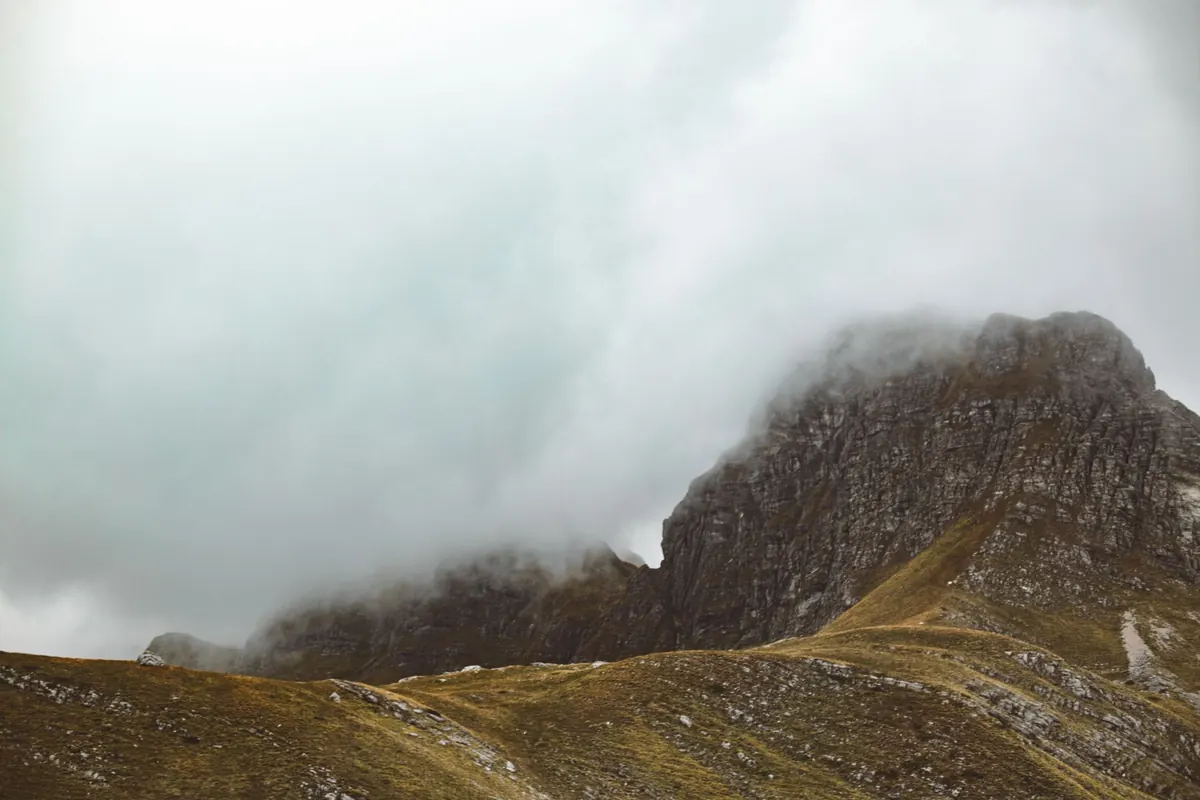
The cloud arrives without ceremony. One minute you are looking down a ridge towards a grey tarn; the next, the tarn has gone, the far wall has gone, and there is nothing left to see but twenty metres of wet grass and a compass that suddenly matters very much.
It usually happens mid-route, not at the start. You have already spent energy and attention, you are warm from climbing, and the instinct is to keep moving rather than stand about. That instinct is worth resisting for a few minutes — long enough to stop, think, and get the map out properly.
Losing the view costs you more than scenery. It takes away your sense of scale and distance, the reassurance of a visible destination, and the small corrections you have been making all day without noticing — the drift to the left of the path, the path that quietly became a sheep track. In clear weather you can navigate approximately and still arrive, because the ground keeps pulling you back on line. In cloud, nothing corrects you. Small errors stack up, and they stack faster when a group is tired.
Cloud on a British fell usually turns up with wind and damp, and often a drop in temperature. That affects hands, patience and concentration, including your own. Which is why the routine needs to be boring and automatic.
Before you plan a bearing you need a starting point. The old STOP habit works well: Stop, Think, Observe, Plan.
Keep your map and compass out of the rucksack before you need them. A compass on a lanyard round your neck and a folded map in a clear case are far more useful than either one buried under a waterproof.
In cloud your working world becomes small: the map, the compass, and the next few dozen metres. Holding the whole route in your head at once is how people get lost. Break it into legs of a few hundred metres, each with a destination you can identify and, ideally, something beyond it that stops you overrunning — a stream, a wall, a ridge line.
Slow the pace deliberately. Half your clear-weather speed on rough ground is not unreasonable, and it beats a fast group scattering along a hillside. Keep everyone together, let the slowest walker set the pace, and count heads at every stop. Out with children, treat the cold as the main risk: they often say nothing until they are thoroughly miserable.
Line the compass edge up between where you are and where you are going, with the direction-of-travel arrow pointing the right way. Turn the housing until the orienting lines sit parallel to the map's grid lines and the orienting arrow points to the top of the map. Read the number at the index line. In Britain the difference between grid north and magnetic north is small on short legs, but check the figure in the map margin and know how to apply it.
Hold the compass flat at roughly waist height and turn your whole body until the red end of the needle sits in the orienting arrow. Look up, pick out a feature in that direction — a boulder, a hummock, anything — and walk to it. Then re-check and pick the next one. Do not walk with your eyes glued to the compass; you will wander, and you will miss the ground under your feet.
Distance matters as much as direction. Work out your own double-pace count — how many times your right foot lands in 100 metres — on a track or playing field, and check it against a measured distance. Then count as you walk a leg. For longer legs, timing works too, using a rough rule of thumb such as 4 km/h plus a minute for every 10 metres of climbing, adjusted for your group and the terrain. Most people are slower than they think.
If you are heading for a point on a line — a bridge over a stream, a gap in a wall — deliberately aim a few degrees to one side of it. When you hit the line you will know which way to turn. Aim straight at it and you may arrive either side without knowing which.
Linear features cannot easily be missed: walls, fences, streams, forestry edges, ridgelines, even the crest of a broad spur. Following one may be longer than the direct line, but in cloud a longer certain route beats a shorter uncertain one. Contours are the other half of the picture — count them, note whether they are tight or widely spaced, and use them to judge whether you are above or
Photo: ROMAN ODINTSOV / Pexels